Standing in the skincare aisle can feel overwhelming. Oils, serums, and creams fill every shelf, and online everyone seems to swear by a different “hero” ingredient. One friend credits collagen. Someone else swears by hyaluronic acid. The real questions are simpler: what is the actual difference, do you need both, and how do you choose?
In This Blog
Hyaluronic acid and collagen are not rivals. They support skin in different ways, and understanding that difference makes a skin care routine easier to build—without guessing or wasting money.
What Is Hyaluronic Acid?
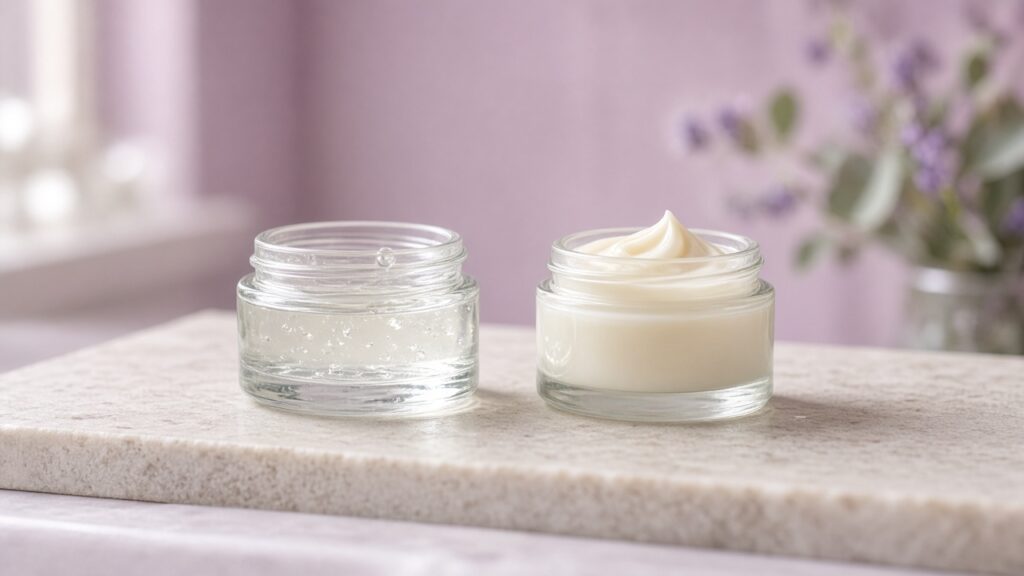
Hyaluronic acid (HA) is a substance your body already makes. In skincare, it is mainly used as a humectant: it attracts and holds water near the skin’s surface, which can make skin look smoother and more plump when it is dehydrated.
You will often see marketing that says HA “holds 1,000 times its weight in water.” That line is widely repeated, but it overstates what the ingredient does. HA does bind some water and can help with hydration—but the extreme “1,000×” claim is not a solid way to describe everyday topical products. A better framing is simple: HA helps skin hold onto moisture; results still depend on the formula, how you use it, and the rest of your routine.
Molecular weight matters. Not all hyaluronic acid behaves the same way on skin. Higher-molecular-weight HA tends to stay closer to the surface and can help reduce water loss. Lower-molecular-weight forms are studied for deeper reach within the outer skin layers. Many modern serums combine more than one size for that reason. “Penetrates deep and pulls moisture from deeper layers” is too sweeping for every HA product.
How Hyaluronic Acid Helps Your Skin
When it suits your skin and formula, topical HA may help with:
- A more hydrated, less tight feel
- Softer-looking fine lines that are linked to dryness
- A smoother, plumper look on the surface
- Layering under moisturizer in many routines, including oily or combination skin
HA is often well tolerated, which is why beginners like it—but no ingredient is irritation-proof for everyone. Fragrance, preservatives, acids, or other actives in the same product can still bother sensitive skin. Patch-test new products, and stop if stinging, redness, or rash appears.
What Is Collagen?
Collagen is the most abundant protein in your body and a major part of the support network that helps skin feel firm and springy. Your own collagen production gradually declines with age, and daily UV exposure speeds that breakdown. That is one reason firmness and fine lines change over time.
What Collagen Can (and Cannot) Do for Skin
It helps to separate topical collagen from oral collagen—they are not the same tool.
Topical collagen (creams and serums)
Large, intact collagen molecules generally sit on the skin surface rather than rebuilding collagen deeper in the dermis the way marketing sometimes implies. On the surface they can act as a moisturizing film and temporarily soften the look of dryness. Smaller collagen peptides are being studied more closely; evidence is still developing, and results vary by formula. Topical collagen should not be described as a guaranteed way to “rebuild skin architecture.”
Oral collagen (supplements)
Hydrolyzed collagen peptides taken by mouth are a separate category. Some clinical studies report improvements in hydration or elasticity over weeks of consistent use, but products differ, and supplements are not a substitute for sunscreen, a solid skin care routine, or medical advice. If you are pregnant, nursing, or managing a health condition, ask a clinician before starting supplements.
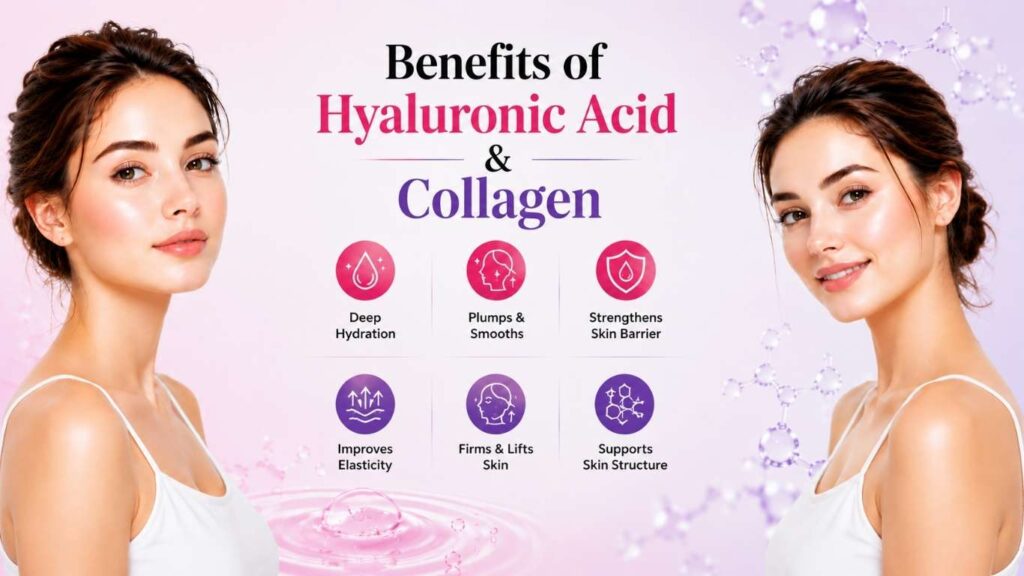
Key Differences
How these ingredients actually work
Hyaluronic acid mainly supports surface hydration. Many people notice a fresher, more comfortable look within days when dryness was the main issue—especially if they apply it on damp skin and seal it with moisturizer.
Collagen support is slower and less direct from a jar. Topical products may improve how skin feels and looks through hydration and film-forming effects. Longer-term firmness goals usually need patience, sun protection, and realistic expectations about what a cream can and cannot do.
Think of it this way: hyaluronic acid is often the quicker comfort step for dehydrated skin. Collagen-related products are better framed as supportive extras—not a one-step rebuild of your skin’s foundation.
When hyaluronic acid helps most
HA is a smart first focus if your skin feels tight, dull, or dehydrated. It is especially useful when:
- Winter air or dry climates leave skin thirsty
- Fine lines look worse because of dryness
- You want a lightweight texture under sunscreen or makeup
- You use drying actives and need extra water-binding support
- Even oily skin feels dehydrated under the oil
Real-world example: skin looks tired before an event. A simple HA serum on damp skin, followed by moisturizer, can improve comfort and surface glow within a day or two for many people—without promising a permanent remodel.
When collagen support fits better
Collagen-focused products or carefully chosen supplements may fit if:
- Firmness and elasticity are your longer-term concerns
- You can stay consistent for several weeks before judging results
- You already wear daily sunscreen (UV is a major collagen breaker)
- You understand topical collagen is supportive, not a surgical-level fix
Real-world example: after months of consistent care—including sunscreen and a steady routine—skin may look and feel more resilient. That outcome usually comes from the whole routine, not one bottle alone. Pairing habits with a solid skincare routine matters more than chasing a single miracle claim.
Which One Should You Choose?
You often do not have to pick only one.
Lean toward hyaluronic acid if
- Dehydration or tightness is your main complaint
- You want a lightweight, budget-friendly hydration step
- You prefer products that play well under moisturizer and SPF
Add collagen support if
- Firmness and longer-term resilience are priorities
- You can wait weeks, not hours, to judge change
- You already cover the basics: cleanse, moisturize, and protect from the sun
A practical combined approach
Use an HA serum morning and night on slightly damp skin, then moisturizer. If you add a topical collagen or peptide product, place it where the label suggests—often after water-based serums and before richer creams. Oral collagen, if you choose it, is optional and separate from what you put on your face.
How to Use Them Well
Hyaluronic acid tips
- Apply to damp skin for better comfort and absorption
- Seal with moisturizer so water does not evaporate away in dry air
- Once or twice daily is enough for most routines

Collagen tips
- Stay consistent; surface hydration shows sooner than firmness goals
- Vitamin C serums and daily sunscreen support your own collagen better than any single cream claim
- Treat oral supplements as optional extras, not replacements for topical care
- UV protection matters: sunlight breaks down collagen over time
Bottom line
Hyaluronic acid and collagen work best as partners, not opponents. HA is usually the faster helper for dehydrated, tight-feeling skin. Collagen-related products are slower and should be described carefully: topical collagen mainly supports the surface, while oral peptides are a different decision entirely. Start with your current concern—dryness versus firmness—then build a routine you can keep. What works for a friend may not be ideal for you. Watch how your skin responds, and give changes time.
Sources and a Careful Note
Careful note: This article is for general skincare education, not medical advice. Patch-test new products. If you have persistent irritation, acne, eczema, or other skin concerns, see a dermatologist or qualified clinician. Cosmetic products are not the same as medical treatments.
- New Scientist: benefits of hyaluronic acid claims can be oversold
- PMC review: hyaluronic acid forms and topical effects
- PMC review: collagen in cosmetic products and penetration limits
- PMC review: topical collagen misconceptions and mechanisms
- American Academy of Dermatology: reducing premature skin aging
- FDA: wrinkle treatments and other anti-aging cosmetics