
If you’ve ever scrolled through Instagram or YouTube and seen the “glass skin” trend, you’ve already met Korean skin care. It’s not just a passing trend. The 10 step Korean skin care routine is a whole philosophy built around nourishing your skin, rather than covering up problems with makeup.
What makes this routine so interesting is that it isn’t designed for just one skin type. Whether your skin is oily, dry, sensitive, or acne-prone, you can tweak it to work for you.
In this guide, we break down the full 10 step Korean skin care routine in the right order. We also show how to adapt it for Korean skincare for sensitive skin, Korean skincare for dry skin, and Korean skin care for acne.
In This Blog
- Why Is Korean Skin Care So Popular?
- 10 Step Korean Skin Care Routine at a Glance
- The 10-Step Korean Skin Care Routine Explained (In Order)
- Simple Daily vs. Weekly Routine
- 10 Step Korean Skin Care Routine: Morning vs. Night
- Extra Tips for Sensitive Skin
- Extra Tips for Dry Skin
- Extra Tips for Oily and Combination Skin
- Extra Tips for Acne-Prone Skin
- Final Thoughts
- FAQs
Why Is Korean Skin Care So Popular?
The whole idea behind Korean beauty is “prevention over correction.” Instead of waiting for a problem and then trying to fix it, the goal is to keep skin strong and hydrated so issues are less likely to develop.
That’s why this routine works in layers. Each product does its own job and prepares the skin for the next one.
10 Step Korean Skin Care Routine at a Glance
Here is the full routine in order, with what each step does and how often to use it.
| Step | Product | Main Job | How Often |
|---|---|---|---|
| 1 | Oil cleanser | Removes makeup, sunscreen, and excess oil | Daily (evening) |
| 2 | Water-based cleanser | Washes away sweat and leftover residue | Daily |
| 3 | Exfoliator | Clears dead skin cells | 1–2 times a week |
| 4 | Toner | Rebalances skin and preps for the next steps | Daily |
| 5 | Essence | Light hydration and skin repair | Daily |
| 6 | Serum or ampoule | Targets a specific concern | Daily |
| 7 | Sheet mask | Intense hydration and instant glow | 2–3 times a week |
| 8 | Eye cream | Cares for the delicate eye area | Daily |
| 9 | Moisturizer | Seals in all the layers | Daily |
| 10 | Sunscreen | Protects against sun damage | Every morning |
The 10-Step Korean Skin Care Routine Explained (In Order)
Let’s go through the routine step by step. As a rule, apply products from the thinnest to the thickest texture.
Step 1: Oil Cleanser
The first step is an oil-based cleanser. It removes the day’s buildup of dirt, sunscreen, makeup, and excess oil.
It cleans gently without stripping away natural moisture, so your skin feels soft and fresh. Also, this step is especially useful if you wear makeup regularly, since oil dissolves oil far more effectively than water alone.
Step 2: Water-Based Cleanser (Double Cleansing)
Next comes a gentle water-based cleanser to wash away any remaining sweat or residue. This “double cleansing” method is at the heart of the Korean routine. Overall, it leaves skin thoroughly clean without feeling stripped or tight.
Tip for sensitive skin: choose a soap-free, fragrance-free cleanser. Many products made for Korean skincare for sensitive skin contain soothing ingredients like centella asiatica (cica) or green tea to help calm irritation.
Step 3: Exfoliation (1–2 Times a Week)
Exfoliating removes dead skin cells so the rest of your products can absorb properly.
But don’t do this step daily. Over-exfoliating can weaken the skin barrier, especially if you have sensitive or acne-prone skin.
Step 4: Toner
A toner isn’t just there for a nice scent. Its real job is to help rebalance your skin’s pH and prep it for the steps that follow.
For dry skin, a hydrating toner is especially helpful because it gives a quick dose of moisture right after cleansing.
Step 5: Essence
This step is fairly unique and isn’t usually found in Western skincare routines. Essence is a light, watery product that focuses on both hydration and skin repair.
In any routine built around Korean skincare for dry skin, essence is considered a must-have, as it adds a lightweight layer of hydration. Pat or gently tap it onto your face instead of rubbing.
Step 6: Serum or Ampoule
This is where targeted treatment comes in. So, choose a serum based on your main concern:
- Vitamin C for brightening
- Niacinamide for oil control and acne
- Hyaluronic acid for hydration
Korean Hyaluronic Acid
Hyaluronic acid is often said to hold up to 1,000 times its weight in water. That’s why it’s so popular for dry and dehydrated skin.
It doesn’t just add moisture. It also helps fine lines look softer and less noticeable. Want to know how it compares with collagen? Read our guide on hyaluronic acid vs collagen.
Step 7: Sheet Mask (2–3 Times a Week)
The sheet mask is easily the most fun part of any Korean beauty routine. In just 15–20 minutes, it gives an intense burst of hydration and an instant glow.
Also, if you have acne-prone skin, look for non-comedogenic sheet masks with ingredients like tea tree oil or cica.
Step 8: Eye Cream
The skin around your eyes is thinner and more delicate than the rest of your face. That’s why it deserves its own product.
A good eye cream can help with the look of dark circles, puffiness, and fine lines. Use your ring finger to gently dab it on, since it applies the least pressure.
Step 9: Moisturizer
After all those layers, a good moisturizer seals everything in.
- Dry skin: go for a thicker, cream-based moisturizer.
- Oily or acne-prone skin: a lightweight, gel-based formula will suit you better. See our picks for non-comedogenic moisturizers.
- Sensitive skin: look for fragrance-free, ceramide-based moisturizers. They help repair the skin barrier without causing irritation.
Step 10: Sunscreen (The Most Important Step)
Never skip this step in the morning, whether you stay indoors or go out. Sunscreen doesn’t just prevent sunburn. It also helps protect against premature aging, dark spots, and long-term skin damage. A broad-spectrum SPF protects skin from UV radiation, and the American Academy of Dermatology recommends SPF 30 or higher. Apply it as the final step of your morning routine.
Plus, Korean sunscreens are especially popular because of their light, non-greasy, and white-cast-free formulas.
Simple Daily vs. Weekly Routine
You don’t need to do all 10 steps every day, so adapt the routine to your skin type and sensitivity. Here’s an easy way to split them:
| Do Every Day | Do 1–3 Times a Week |
|---|---|
| Cleanse (oil + water-based cleanser) | Exfoliate (1–2 times) |
| Toner, essence, and serum | Sheet mask (2–3 times) |
| Eye cream and moisturizer | |
| Sunscreen every morning |
10 Step Korean Skin Care Routine: Morning vs. Night
The Korean skin care routine for day and night follows the same basic order, with a few small changes.
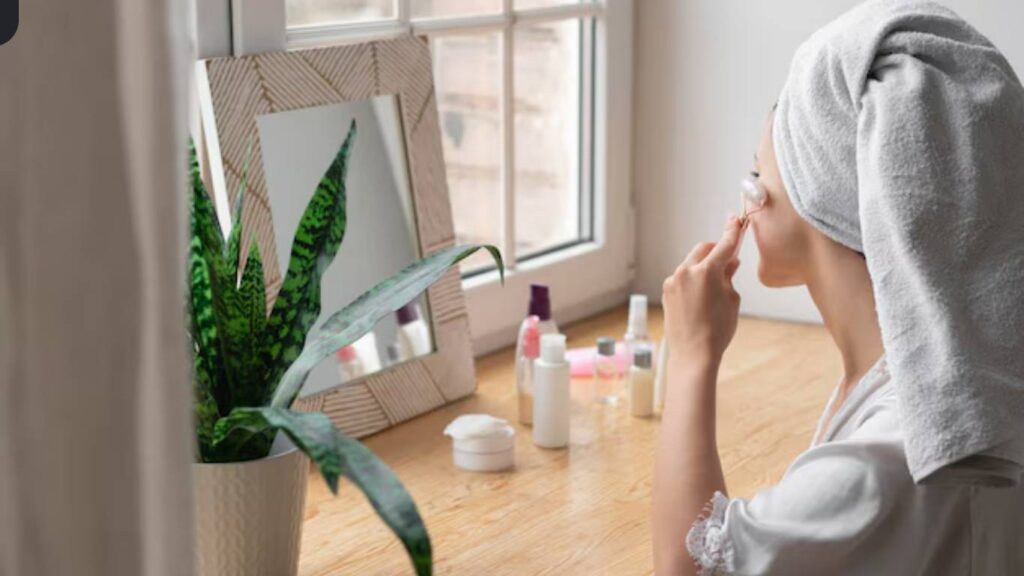
Morning: keep it light. Cleanse, hydrate, moisturize, and finish with sunscreen. Sunscreen is the star of your daytime routine.
Night: this is when you double cleanse to remove sunscreen and makeup. The focus shifts to repair and hydration, so it is a good time for richer creams, sheet masks, or an overnight mask.
Extra Tips for Sensitive Skin
If your skin reacts easily, don’t jump into all 10 steps of Korean skincare at once. Instead, introduce one new product at a time and wait 3–4 days to see how your skin responds.
When it comes to Korean skincare for sensitive skin, the golden rule is simple: less is more.
Extra Tips for Dry Skin
Dry skin benefits the most from the layering concept. Each layer adds a bit more moisture, and then the final moisturizer locks it all in.
Using a humidifier and drinking enough water throughout the day can also help keep skin hydrated.
Extra Tips for Oily and Combination Skin
Using an oil cleanser on oily skin may sound strange, but it isn’t counterproductive. Oil cleansers break down sebum and sunscreen, so oily skin can still enjoy the double cleansing method.
Also, choose a lightweight, less moisturizing toner. If you have combination skin, look for products that help balance your complexion rather than very heavy or very drying formulas.
Extra Tips for Acne-Prone Skin
If you’re prone to acne, avoid heavy, overly oily products. Ingredients like niacinamide, tea tree oil, and salicylic acid can be great additions to this routine. If you have an active breakout, it may be best to pause exfoliation until your skin calms down.
Small habits matter too. Regularly cleaning your pillowcase and phone screen can also help. For marks left behind by breakouts, see our guide to acne scars and hyperpigmentation.
Final Thoughts
Consistency is the real goal of the 10 step Korean skin care routine, not perfection. You don’t need to follow all 10 steps every single day.
Cleanse, hydrate, moisturize, and apply sunscreen daily. Then save the other steps for 2–3 times a week. Most importantly, listen to your skin: keep what works and drop the rest.
With a bit of patience, this routine can help you get naturally healthy, glowing skin over time, whether your skin is sensitive, dry, or acne-prone.
FAQs
Not at all. Think of the 10 steps as a menu, not a strict rulebook. Try to use a cleanser, a hydrating product, moisturizer, and sunscreen every day. Exfoliation and sheet masks are more of a “few times a week” treat for your skin.
It doesn’t have to be. The beauty of this routine is that you swap products, not steps. Choose lighter, gel-based textures and skip extra-rich creams. Many people with acne concerns find their skin behaves better once it is properly hydrated, since dehydrated skin can overproduce oil.
Start small. Use just a cleanser, a simple hydrating toner, a moisturizer, and sunscreen for the first few weeks. Then add one new product at a time. Patch-testing anything new on your inner arm first is always a smart move.
Hyaluronic acid pulls moisture into the skin and helps hold it there, which is why it’s a favorite for tight or flaky skin. It is generally considered one of the gentler ingredients and is suitable for daily use for most people. Apply it to slightly damp skin and seal it in with a moisturizer; in very dry climates, skipping the moisturizer can leave skin feeling drier.
Give a routine at least four to six weeks of consistent use before judging it, because skin doesn’t change overnight. Hydration and glow usually show up first. Concerns like acne scars or fine lines take longer, often a couple of months.
Absolutely. Skin doesn’t know gender. The steps and ingredients work the same way, no matter who is using them.